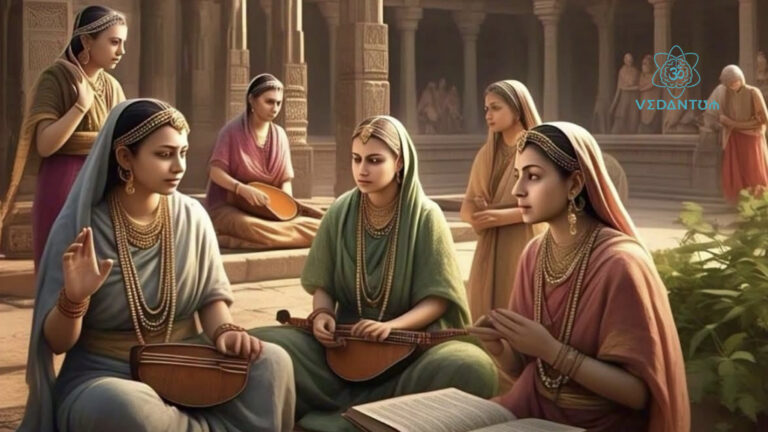
In contemporary public discourse, ancient Indian texts are frequently interpreted through modern ideological frameworks. Among them, the Manusmriti has often been cited in debates surrounding social order, gender roles, and historical ethics. While the text has been subjected to both scholarly analysis and ideological criticism, an honest engagement with its verses reveals a far more layered philosophical outlook than is commonly portrayed.
Within the broader framework of Hinduism, Dharmashastra literature was never meant to function as a rigid, universal legal code. Rather, it served as a reflective corpus addressing ethics, social harmony, and duties in a constantly evolving society. Importantly, many passages emphasize that the prosperity of a family and society depends fundamentally upon the respect accorded to women.
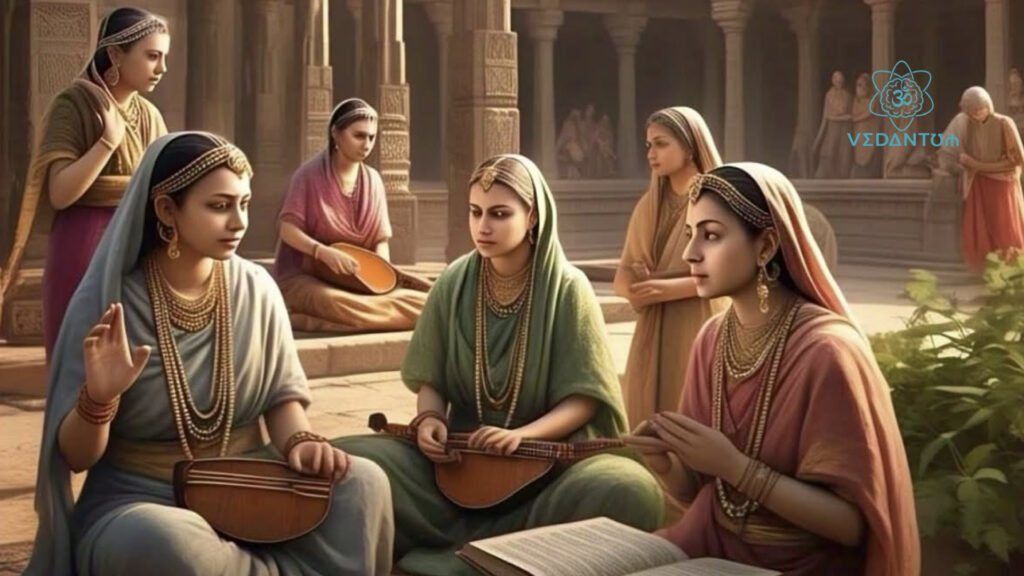
On the occasion of International Women’s Day, it is meaningful to revisit a powerful sequence of verses from Manusmriti (Chapter 3, Verses 56–60), which articulate this principle with remarkable clarity.
The Manusmriti Verses
यत्र नार्यस्तु पूज्यन्ते रमन्ते तत्र देवताः। यत्रैतास्तु न पूज्यन्ते सर्वास्तत्राफलाः क्रियाः।।3:56
In the place, society, or household where women are revered, honored, and their expectations and needs are duly fulfilled, divine entities remain ever-pleased and bestow their benevolence. Conversely, where women are disregarded, disrespected, or treated with disdain, divine grace ceases to exist, and the endeavors undertaken in such places yield no fruitful outcomes.
This celebrated verse articulates one of the most profound sociological principles found in classical Indian thought: the moral and spiritual health of society is inseparable from the dignity of women. In traditional Indian metaphysics, the term “देवता” (divine beings) often symbolizes harmony with the cosmic order—dharma. When women are honored, the household aligns itself with this moral order; when they are disrespected, the entire social structure begins to disintegrate.
शोचन्ति जामयो यत्र विनश्यत्याशु तत्कुलम् । न शोचन्ति तु यत्रैता वर्धते तद्धि सर्वदा ।।3:57।।
The family wherein women suffer anguish and sorrow due to misbehavior and disrespect is destined for imminent ruin and gradual decline. On the contrary, the family where women are kept content and jubilant thrives and ascends toward prosperity and harmony. (The term Jami here refers to close female relatives such as daughters, daughters-in-law, newly-wedded women, etc.)
Ancient Indian thinkers regarded the family as the foundational unit of civilization. This verse states that when women experience sorrow due to injustice or disrespect, the destruction of the family becomes inevitable. Conversely, a household where women remain content naturally progresses toward prosperity. This observation is not merely moralistic—it is deeply sociological. Women historically carried the responsibility of nurturing cultural values, emotional stability, and generational continuity.
जामयो यानि गेहानि शपन्त्यप्रतिपूजिताः । तानि कृत्याहतानीव विनश्यन्ति समन्ततः ।।3:58।।
The households where women, subjected to scorn and disregard, nurture thoughts of curse and malice within their hearts, inviting the family’s downfall, inevitably find themselves devastated as if by malevolent mystical forces (Kritya refers to an invisible force akin to sorcery that inflicts harm upon individuals or families).
The metaphor of कृत्या (Kritya) represents unseen destructive forces. In psychological and sociological terms, the verse points to the corrosive effects of resentment, humiliation, and emotional suffering. A household that breeds injustice inevitably cultivates forces that erode its own stability. Thus, the text warns that disrespect toward women ultimately becomes self-destructive for the family itself.
तस्मादेताः सदा पूज्या भूषणाच्छादनाशनैः । भूतिकामैर्नरैर्नित्यं सत्कारेषूत्सवेषु च ।।3:59।।
Therefore, individuals who aspire for wealth, success, and unceasing progress must ensure that, during familial ceremonies, religious observances, and festive occasions, the women of the family are honored with adornments, fine garments, delectable delicacies, and other tokens of reverence and affection.
Ancient Indian culture embedded ethical values within social rituals. Festivals, ceremonies, and family gatherings were not merely religious acts—they were cultural mechanisms for reinforcing respect and gratitude. By instructing men to honor women with gifts and affection during these occasions, the verse emphasizes the importance of visible gestures of appreciation within family life.
सन्तुष्टो भार्यया भर्ता भर्त्रा भार्या तथैव च । यस्मिन्नेव कुले नित्यं कल्याणं तत्र वै ध्रुवम् II3:60II
The household wherein the husband strives daily to keep his wife content and, in turn, the wife equally endeavors to keep her husband pleased, is assuredly a house destined for prosperity, well-being, and unwavering harmony. Such a family shall undoubtedly flourish.
This verse presents the ideal of mutual reciprocity within marriage. Far from depicting a unilateral relationship, it portrays marital harmony as a cooperative partnership based on shared responsibility and mutual satisfaction. In the Dharmic worldview, prosperity arises not from dominance but from balance and mutual respect.
The Upanishadic Vision of Women
The reverence for women in Indian philosophy is not limited to Dharmashastra literature. The Upanishads, which represent the highest philosophical expressions of the Vedic tradition, also present striking examples of women participating as intellectual authorities.
Gargi Vachaknavi
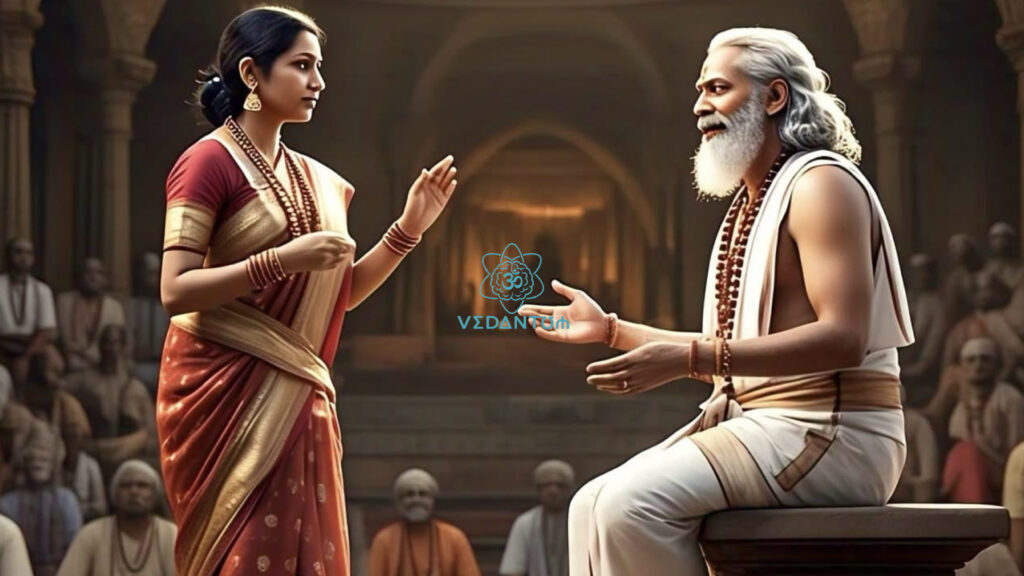
One of the most remarkable figures is Gargi Vachaknavi, who appears in the Brihadaranyaka Upanishad. During a celebrated philosophical assembly organized by King Janaka, Gargi engages in a profound metaphysical debate with the sage Yajnavalkya.
Her questions explore the ultimate substratum of the universe, asking upon what reality the entire cosmos is woven. Such participation demonstrates that women were recognized as serious participants in philosophical inquiry within Vedic intellectual culture.
Maitreyi’s Inquiry into Immortality
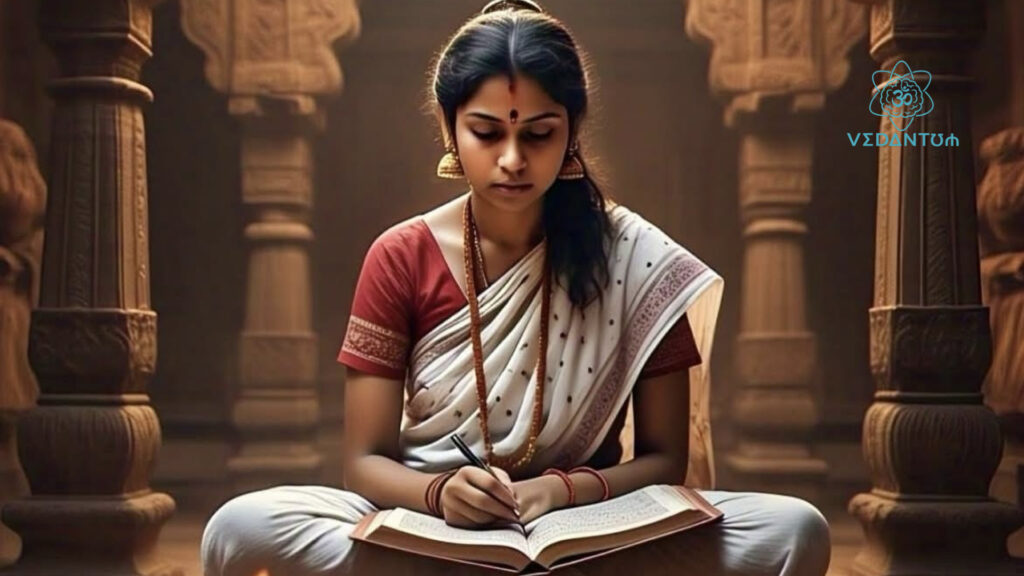
Another illuminating example from the Brihadaranyaka Upanishad is Maitreyi, the wife of Yajnavalkya.
When Yajnavalkya prepares to renounce worldly life, he offers to divide his wealth between Maitreyi and his other wife, Katyayani. Maitreyi responds with a question that reflects extraordinary philosophical insight:
“Can wealth grant immortality?”
When Yajnavalkya replies that wealth cannot grant ultimate liberation, Maitreyi requests knowledge of the Ātman instead of material possessions. This dialogue is among the most celebrated philosophical discussions in Indian intellectual history.
Women as Embodiments of Shakti
Indian metaphysics frequently conceives the universe through the interplay of Shiva and Shakti, consciousness and energy. In this framework, feminine power is not secondary but cosmically fundamental. Texts such as the Devi Mahatmya celebrate the feminine principle as the dynamic energy sustaining the cosmos.
Thus, reverence for women in the Dharmic worldview emerges not merely from social ethics but from metaphysical insight: the feminine represents creative power itself.
Rethinking Modern Narratives
Modern ideological narratives—particularly those influenced by Marxism or colonial-era historiography—often interpret classical texts through the lens of power structures alone.
While critical analysis is necessary in any intellectual tradition, reducing a vast civilizational corpus to simplistic stereotypes risks obscuring its philosophical depth.
When the Manusmriti verses above are read alongside the Upanishadic tradition, a richer picture emerges:
- Women were seen as essential pillars of social prosperity
- Female philosophers participated in metaphysical debates
- The feminine principle was understood as cosmic creative energy
Such ideas hardly align with the caricature of a civilization built upon the systematic denigration of women.
The verses of Manusmriti presented here convey a clear and timeless principle: a society that honors women flourishes; a society that neglects them declines. This insight resonates across centuries and remains profoundly relevant today. While historical texts must always be read critically and contextually, they also deserve to be understood in their fullness rather than through selective interpretation.
Revisiting these teachings reminds us that the Indian philosophical tradition—spanning the Manusmriti, the Upanishads, and later spiritual literature—has long recognized the dignity, intelligence, and indispensable role of women in sustaining civilization.
In that sense, the message of these verses is not merely ancient wisdom—it is an enduring civilizational ideal.